
Our history

The CPN stands in the long tradition of the communist movement in the Netherlands. That history is very extensive and it still requires a lot of study even for us to understand and assess it properly, and especially to draw the right lessons from it for future struggles. The following is a very brief outline of this history.
1881–1918
The founding of the Communist Party of the Netherlands
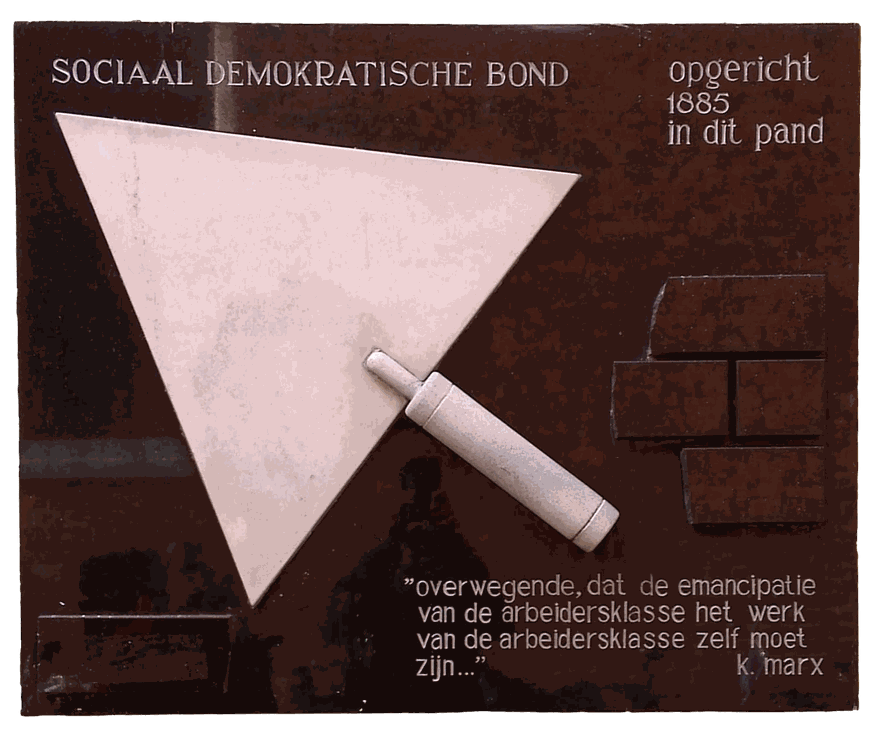
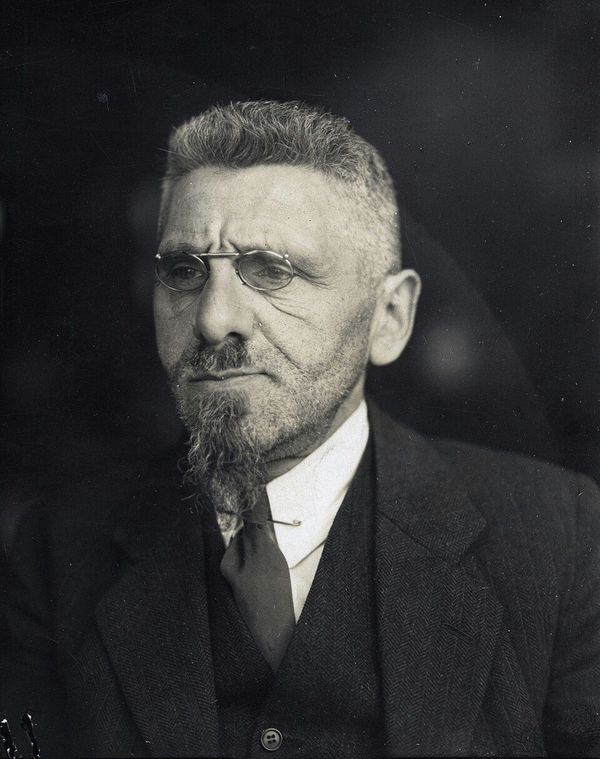
The labor movement in the Netherlands has a rich history. Some milestones included the founding of the Social Democratic League (SDB) by Ferdinand Domela Nieuwenhuis in 1881 and the Social Democratic Workers’ Party (SDAP) in 1894. As with the labor parties of many other countries at the time, there was both a reformist and a revolutionary (Marxist) wing within the SDAP. The reformists wanted to improve the existing capitalist system and achieve socialism through it. The revolutionaries, drawing on the analyses of Karl Marx and Friedrich Engels, recognized that the bourgeois state could not be used to build socialism, making revolution necessary. At that time, the term “social democracy” was still used by both reformists and revolutionaries.
In the early 20th century, a split emerged between the reformist and revolutionary branches of the SDAP. The latter founded the Social Democratic Party (SDP) on March 14, 1909. In 1914, the imperialist First World War broke out, in which millions of human lives were sacrificed in a struggle that was solely about the interests of the monopolies, which fought for the redistribution of resources, markets and colonies. The reformist parties like the SDAP, which were affiliated with the Second International, supported their bourgeoisie in this imperialist war. This marked the final break between the reformist social democratic parties, which used socialism merely as a slogan and sought to preserve capitalism, and the revolutionary parties, which called themselves communist and continued the struggle against capital.
1917
In 1917, the Socialist October Revolution took place. Under the leadership of the Communists, the Russian working class succeeded in overthrowing capitalism and beginning to build socialism. Lenin played an important role in this. This inspired ordinary people around the world and gave great impetus to the revolutionary labor movement. The SDP changed its name to Communist Party of the Netherlands (CPN) in 1918, as did all other revolutionary workers’ parties around the world. In 1919, the Communist International (Comintern) was founded and the CPN became a member of it.
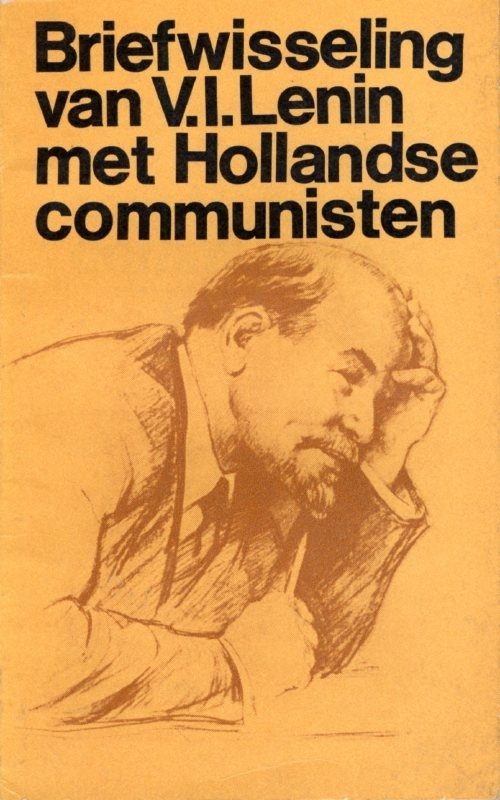 Cover: Progress Publishers
1918–1940
The heroic struggle of Dutch communists in the 20th century
During the 1920s and 1930s, the CPN was at the forefront of every struggle that expressed the interests of working people. The CPN played a decisive role in the struggles of the working class and trade unions, spoke out against Dutch colonialism and for the independence of colonized countries, fought for the emancipation of women and minorities, and fought every social injustice. The CPN vehemently opposed the rise of fascism and the coming war.
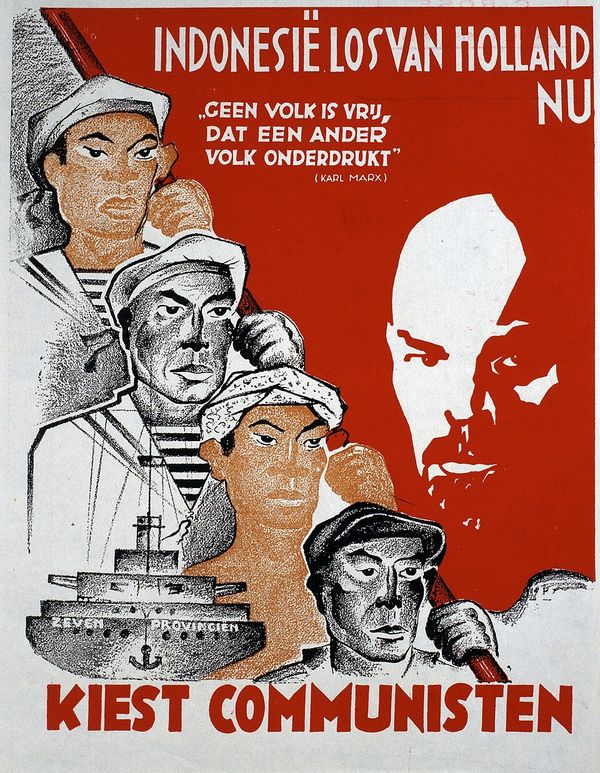 Poster: CPH / National Museum of World Cultures, public domain · source
1940–1945
Resistance and the February Strike
During World War II, the CPN played a leading role in the resistance. One of the highlights was undoubtedly the organization of the February Strike on February 25, 1941. The CPN organized a strike in response to the persecution of Jews and oppression by the fascist occupiers. Hundreds of thousands of people in Amsterdam and other cities stopped work. It was one of the first mass, open protests in occupied Europe. The Communists took the lead in resistance, not only by helping people in hiding and illegally printing and distributing the party newspaper De Waarheid to inform the population of developments, but also with the liquidation of dangerous Nazis and collaborators, sabotage and other life-threatening missions. For this, thousands of CPN members, such as Hannie Schaft, Jan Bonekamp and many others, were killed during the occupation.
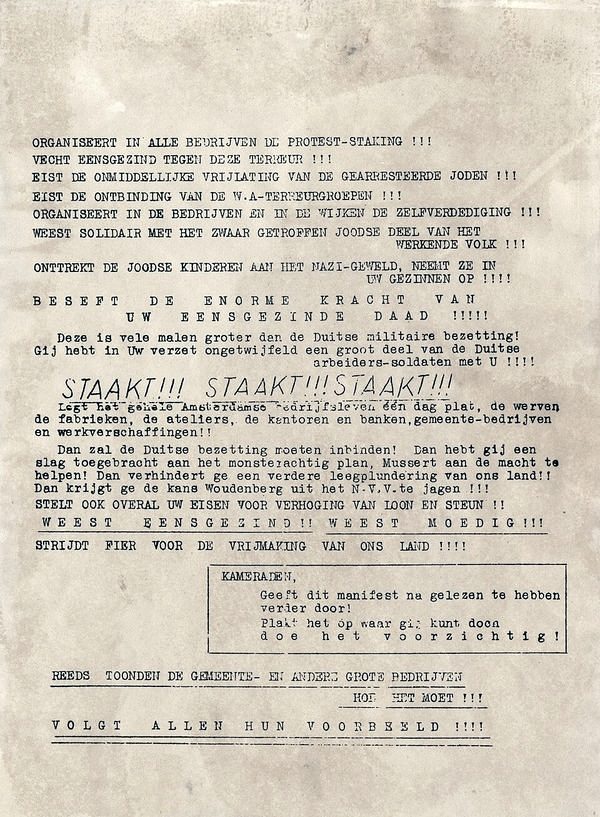 Pamphlet: Lou Jansen (CPN), public domain · source
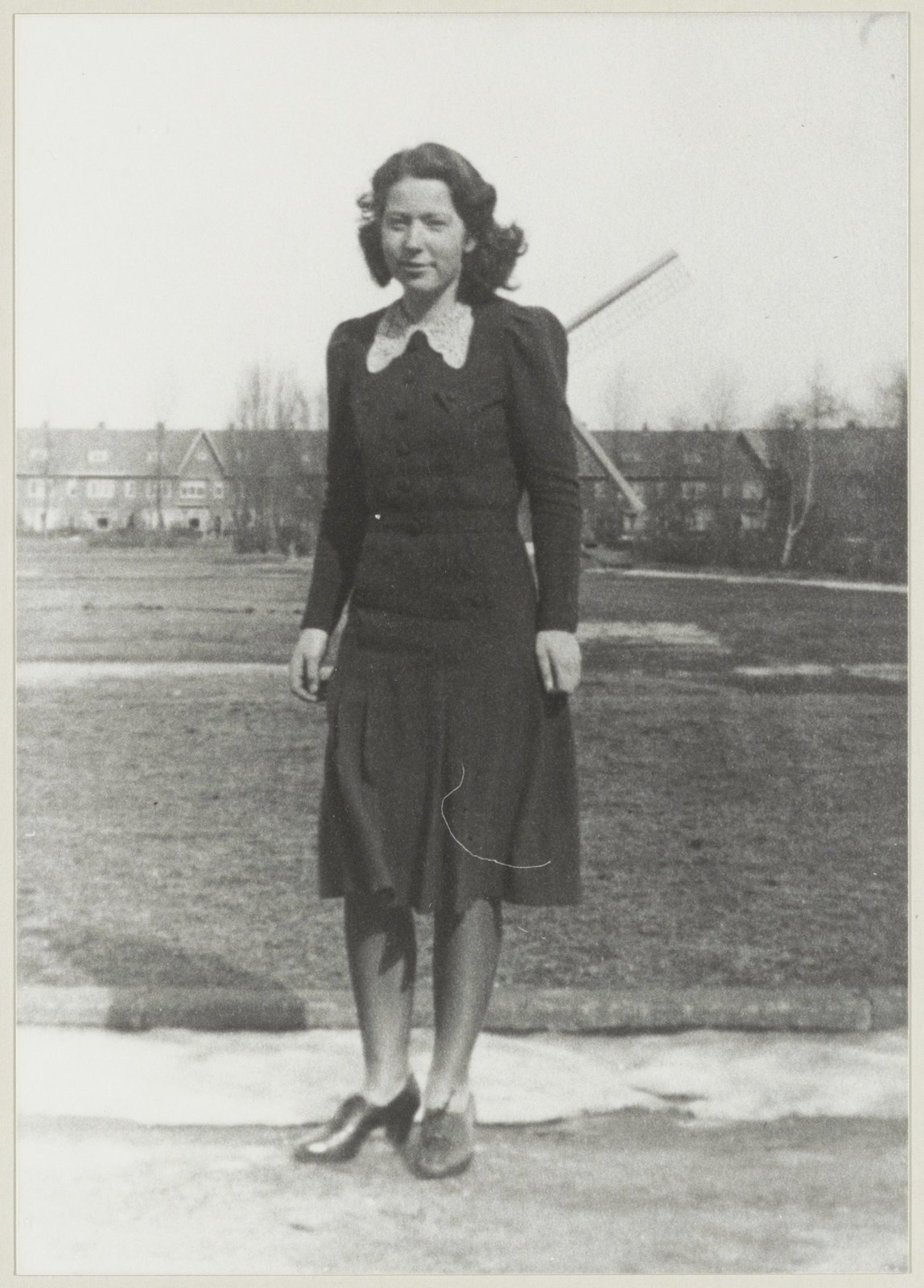 Photo: Cees de Boer / Noord-Hollands Archief, CC0 · source
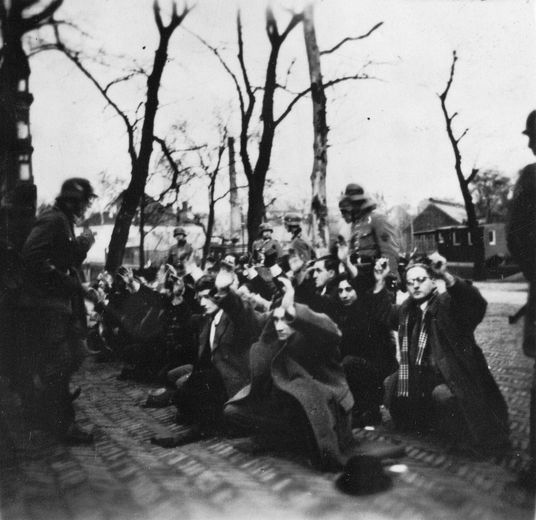 Photo: Rijksvoorlichtingsdienst / Nationaal Archief, public domain · source
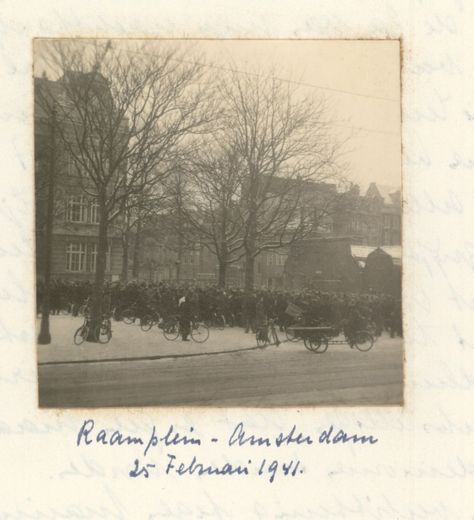 Photo: Keimpe Sikkema, public domain · source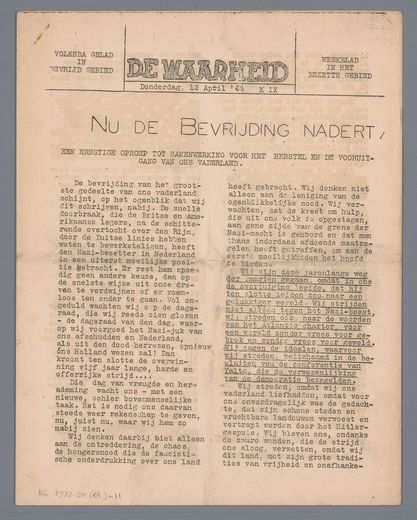
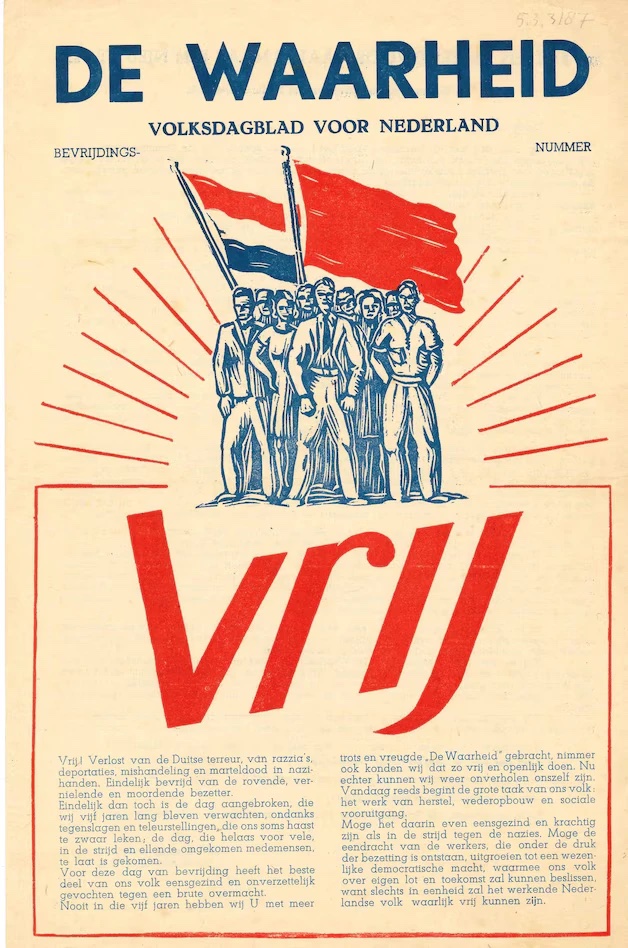 Newspaper: De Waarheid, woodcut artist unknown (copy Vrijheidsmuseum Groesbeek), public domain · source
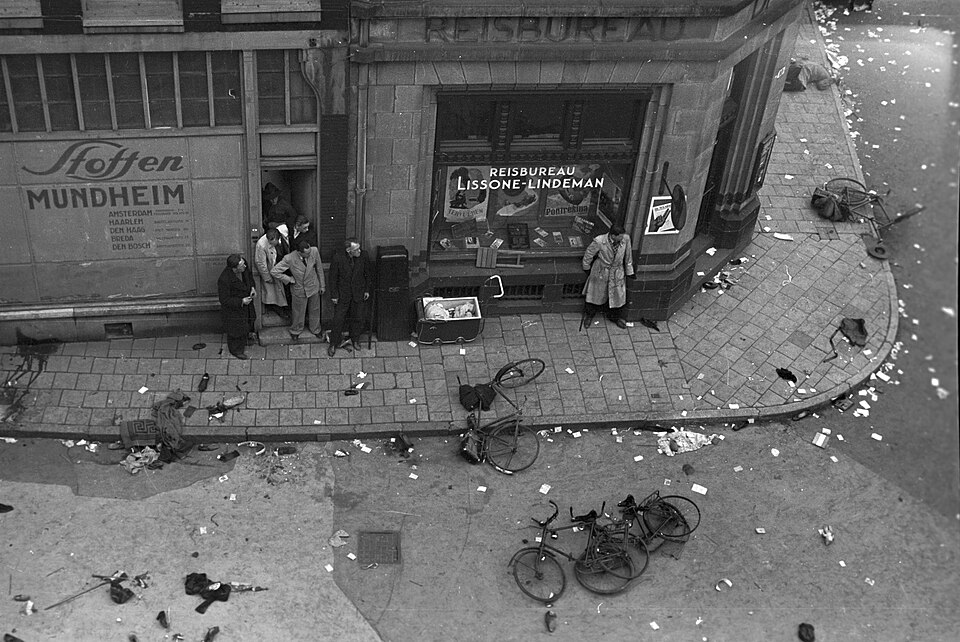 Photo: Wiel van der Randen / Spaarnestad Photo, public domain · source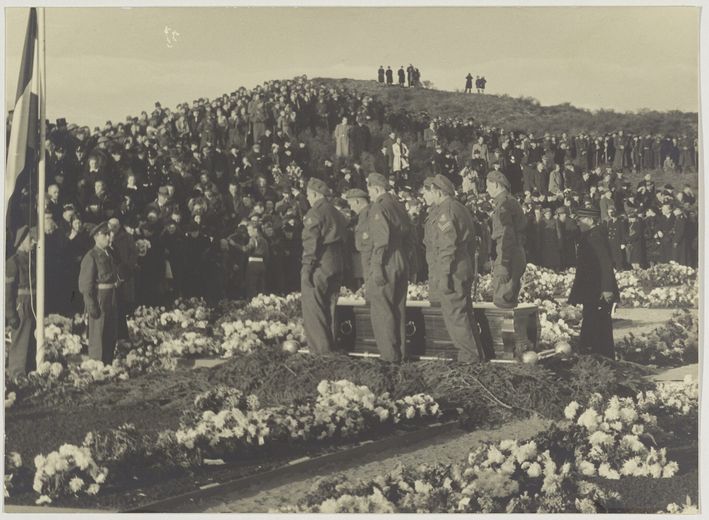
1945–1980
After the war
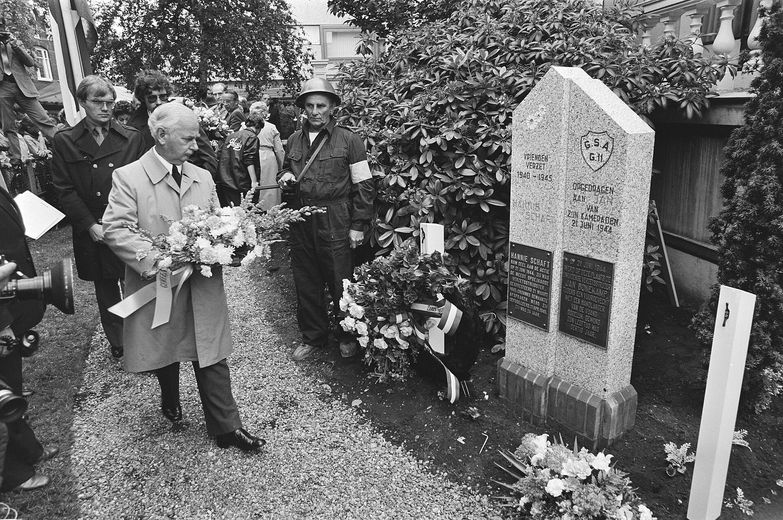
After the war, the CPN was at the forefront of the working class’ struggle for its rights and interests, and against any social injustice. The CPN contributed greatly to the acquisition of many social rights and public benefits. The existence of the Soviet Union and other socialist countries also played an important role. For it was there that many social rights and public services, for the population in general and for women and minorities in particular, were first established and realized. The CPN fought against colonial policies and the foreign interference and interventions of Dutch imperialism.
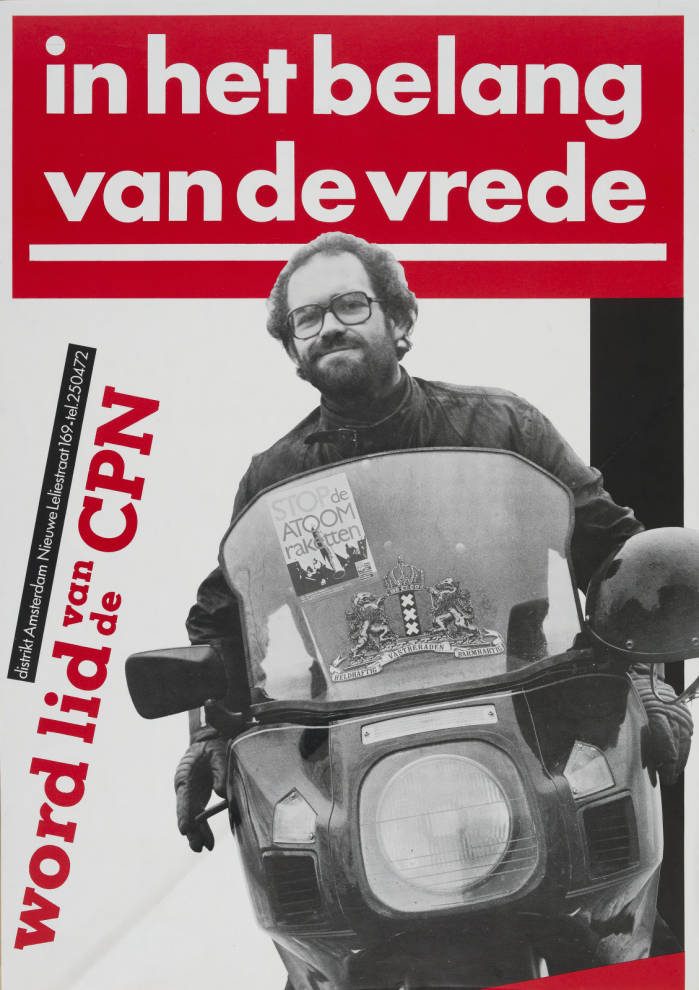 Poster: CPN, DNPP collection, University of Groningen · source
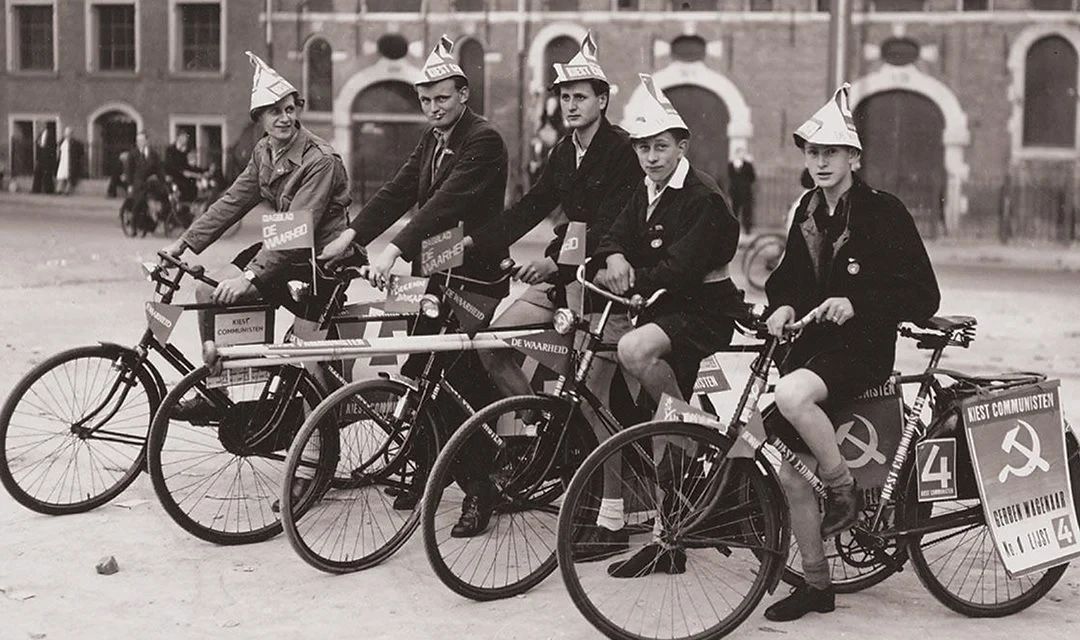 Photo: Ben van Meerendonk / AHF, IISG collection · source
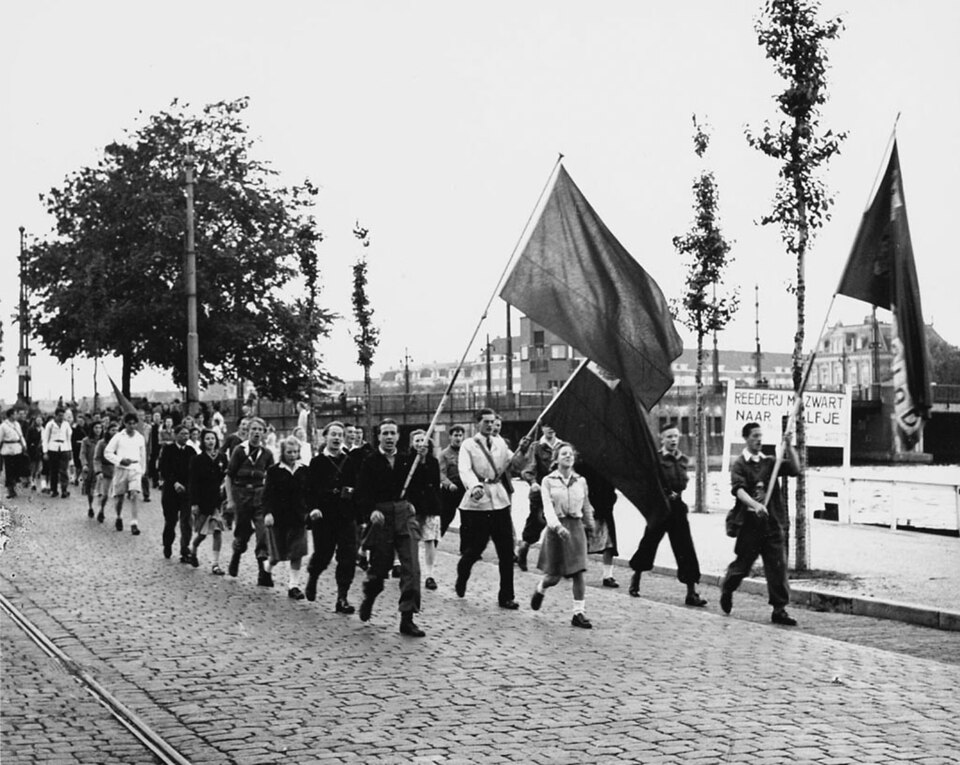 Photo: Ben van Meerendonk / AHF, IISG collection, CC BY-SA 2.0 · source
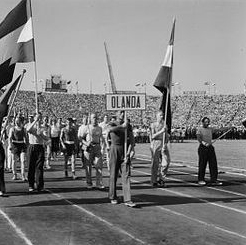 Photo: Kors van Bennekom · source
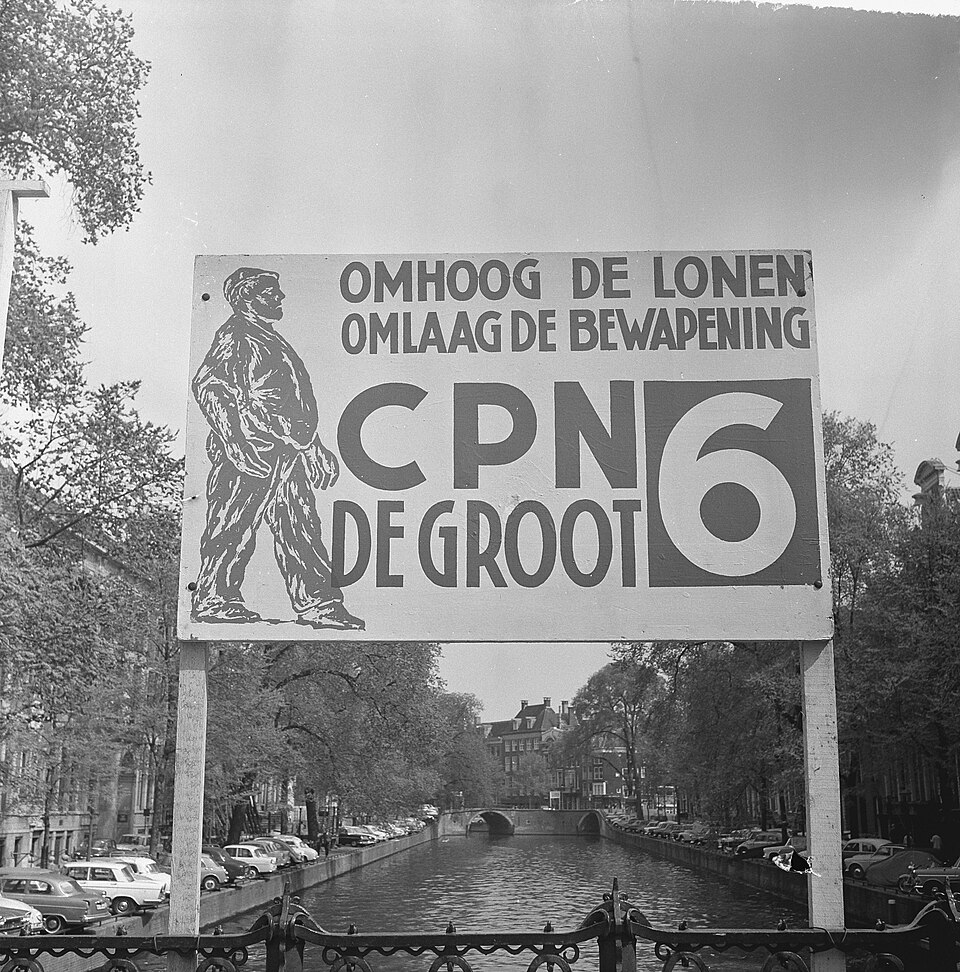 Photo: Jack de Nijs / Anefo, Nationaal Archief, CC0 · source
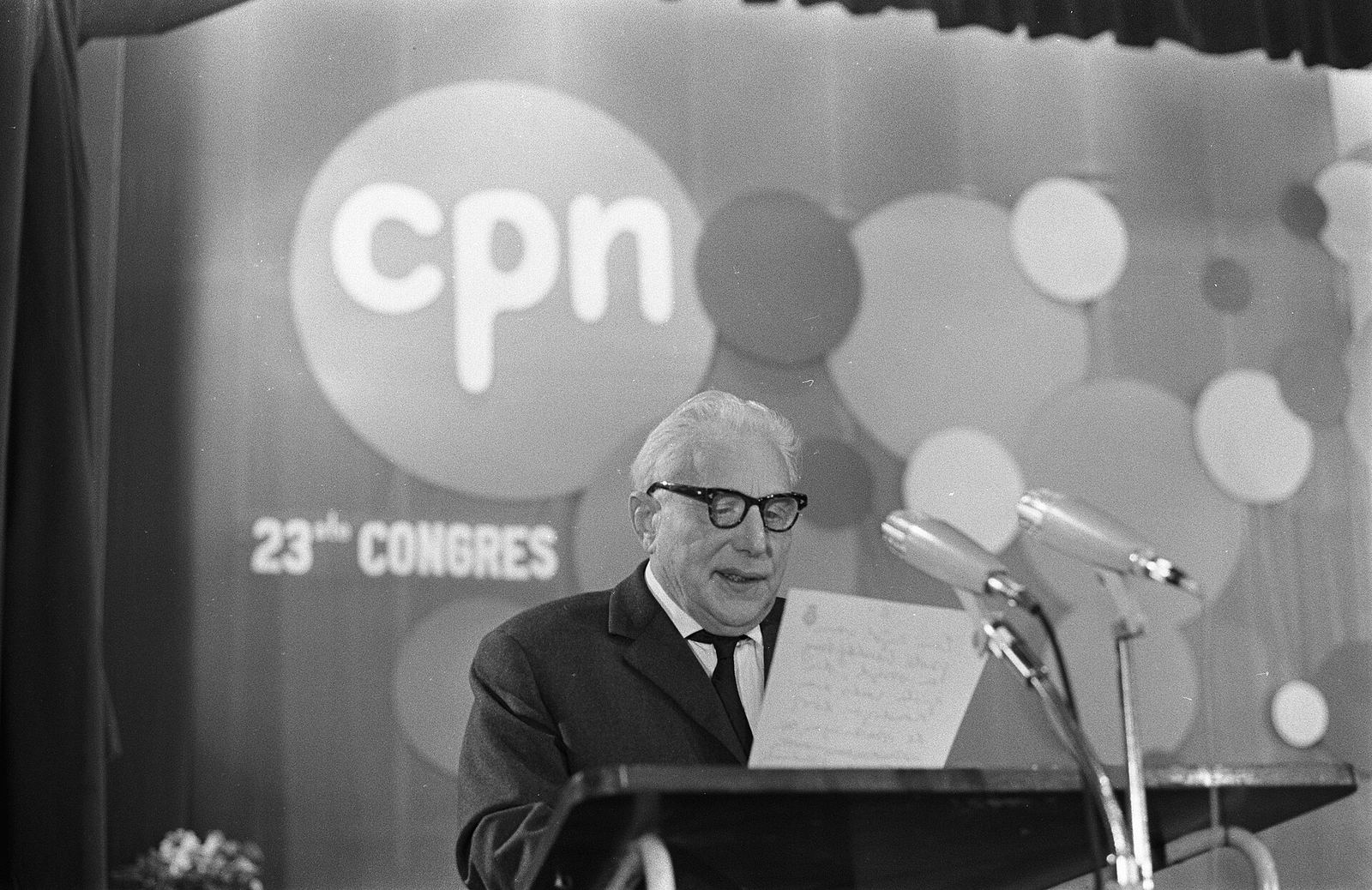 Photo: Joost Evers / Anefo, Nationaal Archief, CC0 · source
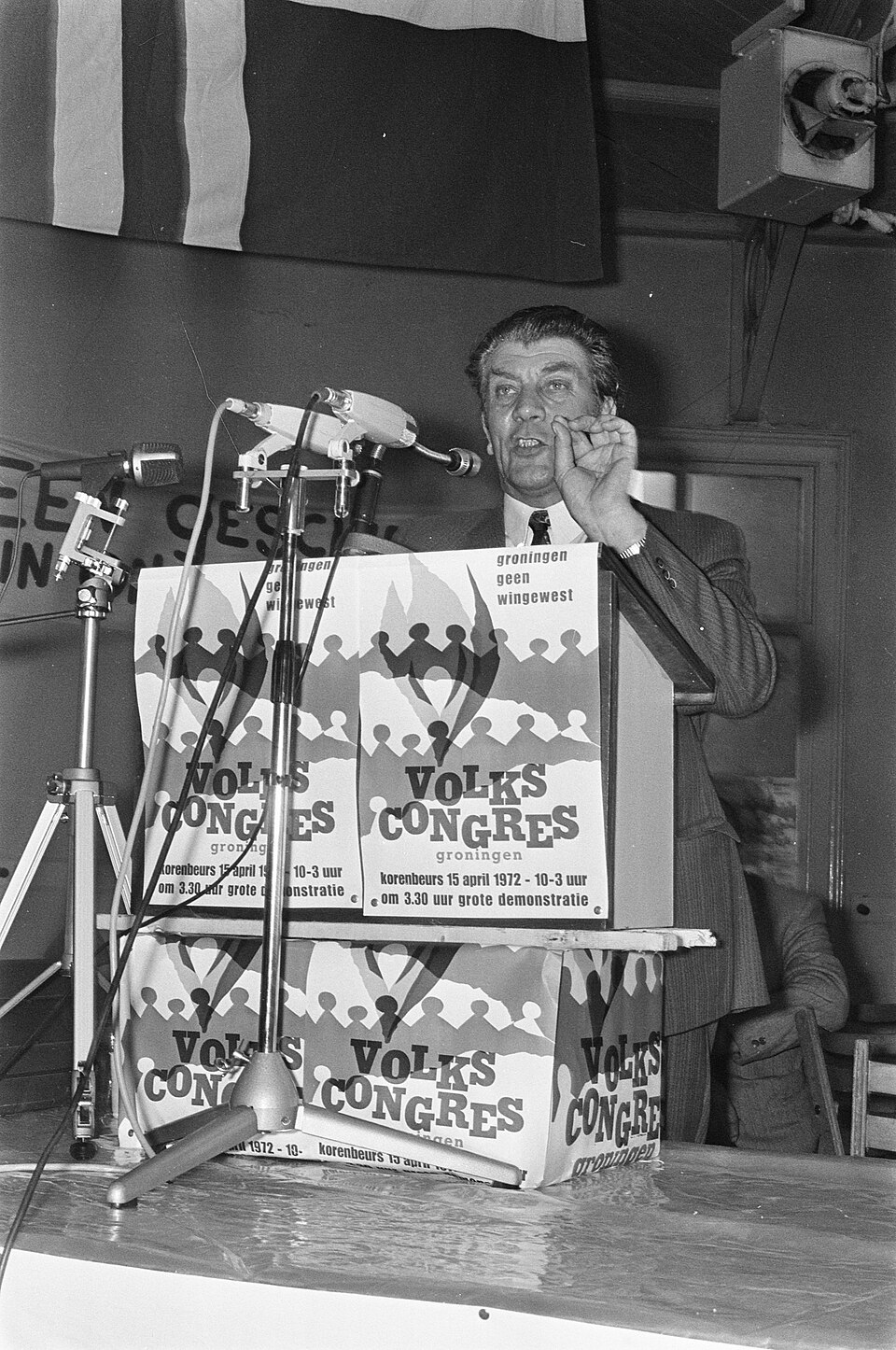 Photo: W. Punt / Anefo, Nationaal Archief, CC0 · source
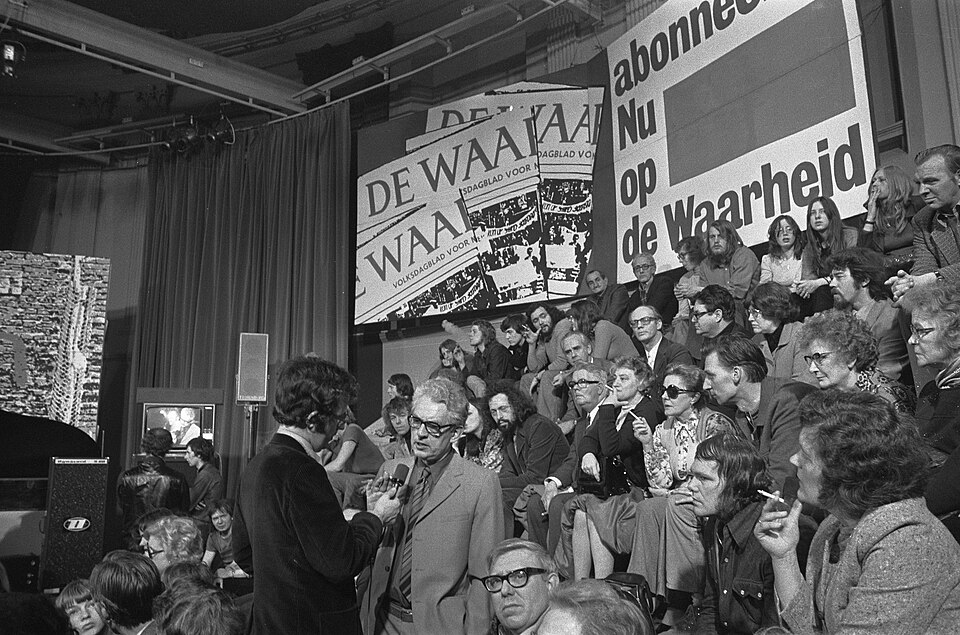 Photo: W. Punt / Anefo, Nationaal Archief, CC0 · source
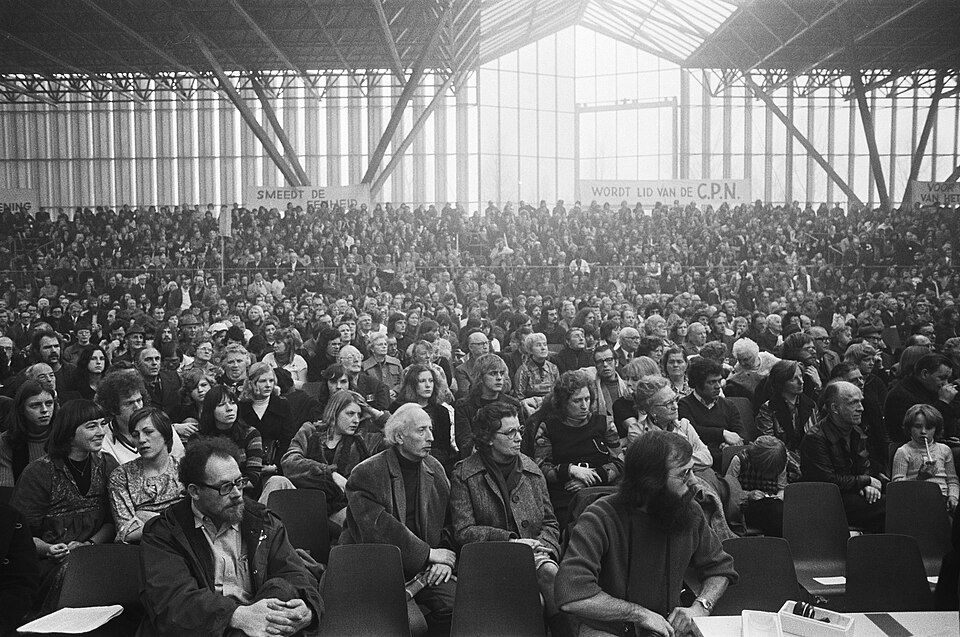 Photo: Hans Peters / Anefo, Nationaal Archief, CC0 · source
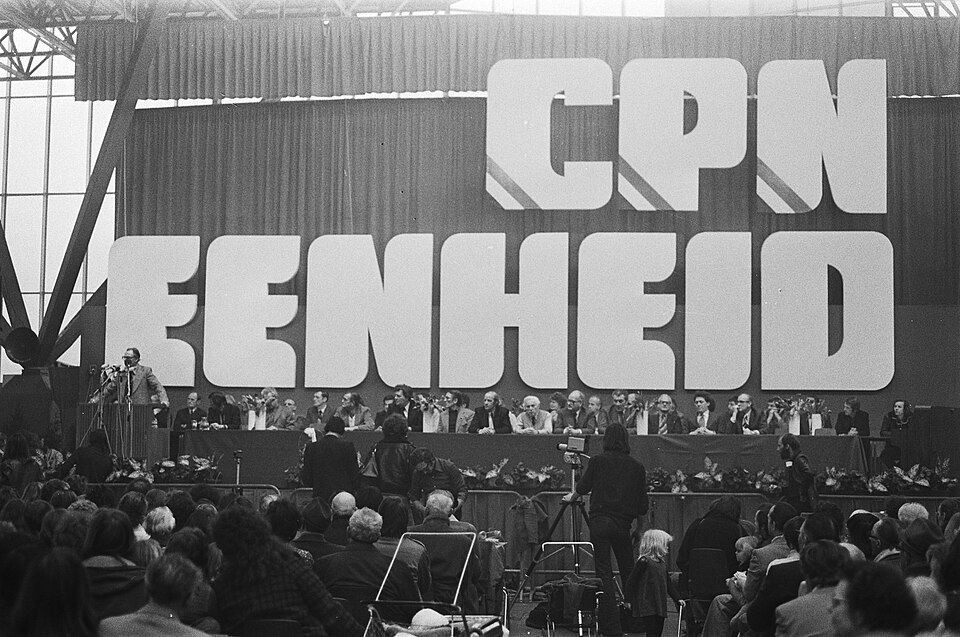 Photo: Hans Peters / Anefo, Nationaal Archief, CC0 · source
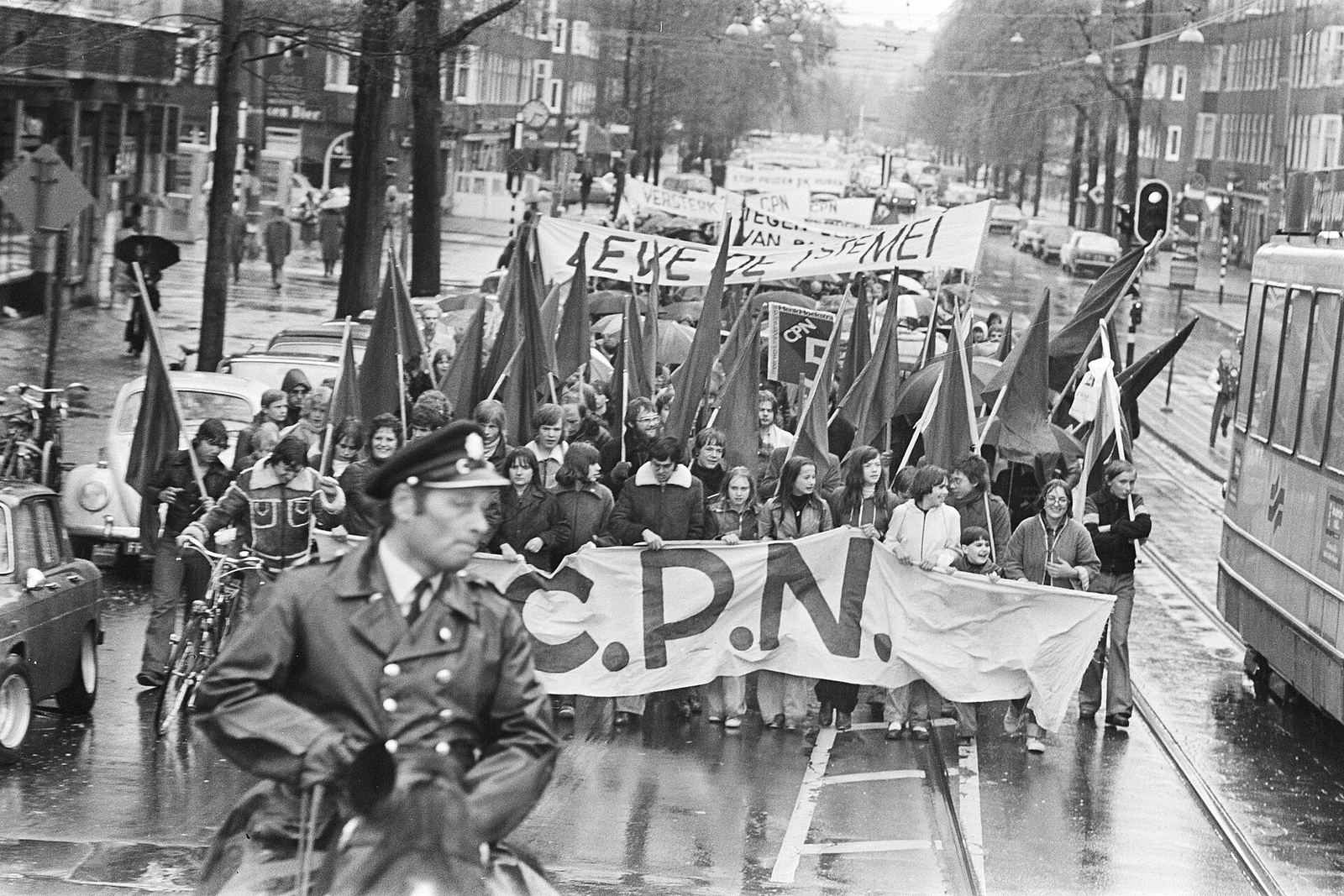 Photo: Rob Bogaerts / Anefo, Nationaal Archief, CC0 · source
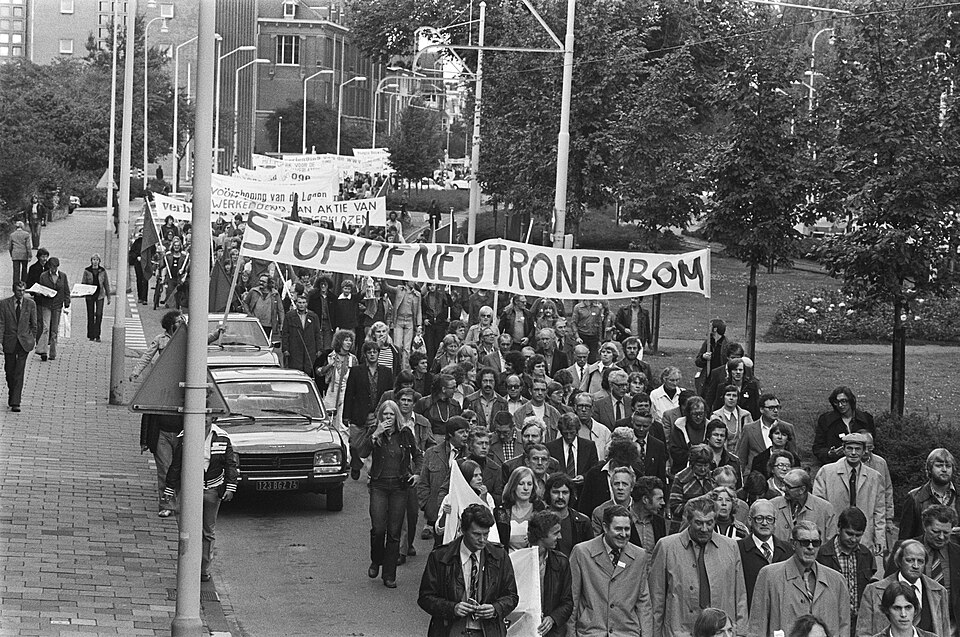 Photo: Rob Bogaerts / Anefo, Nationaal Archief, CC0 · source
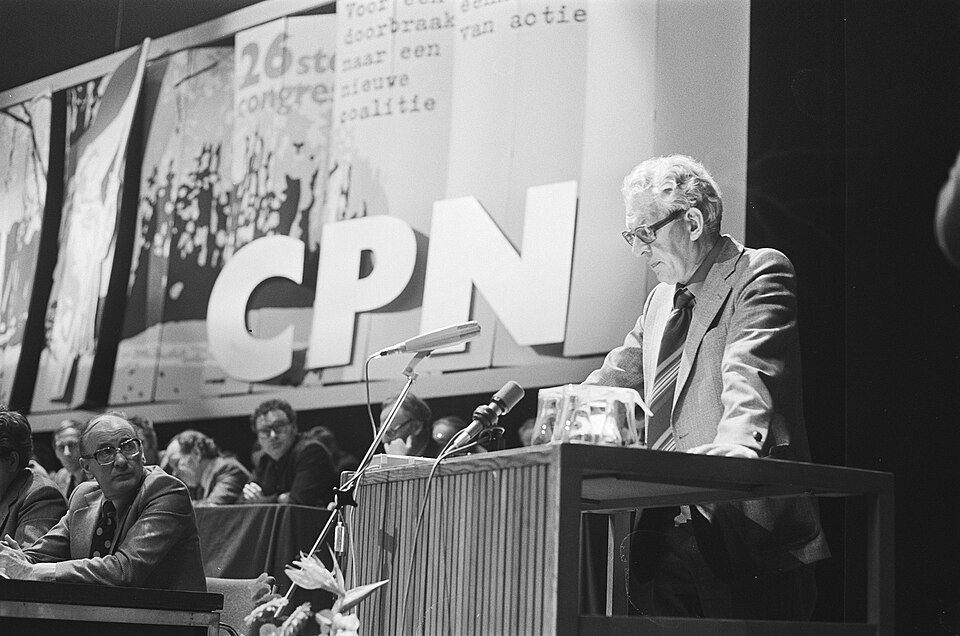 Photo: Rob Bogaerts / Anefo, Nationaal Archief, CC0 · source
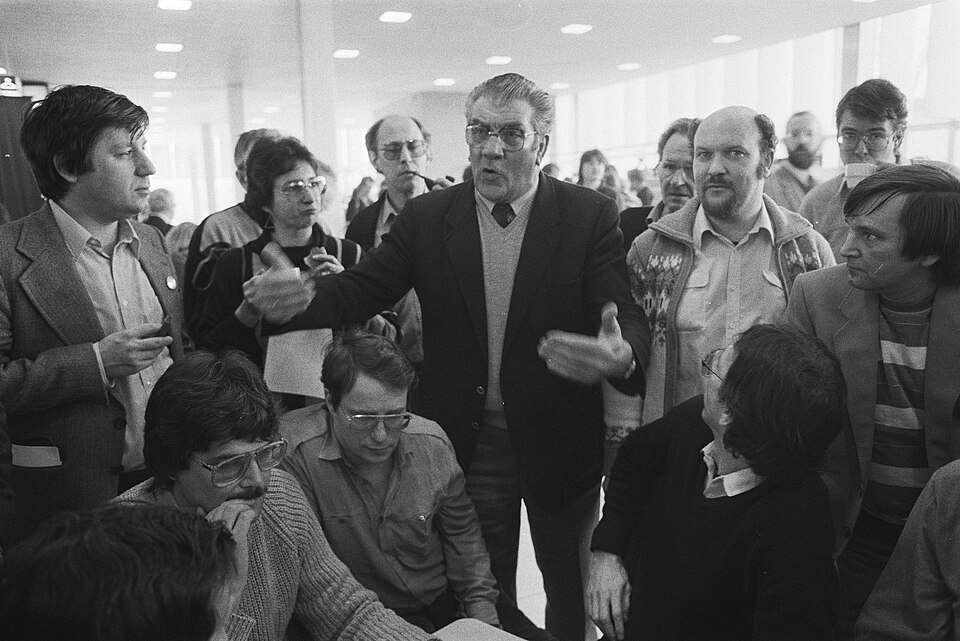 Photo: Rob Croes / Anefo, Nationaal Archief, CC0 · source
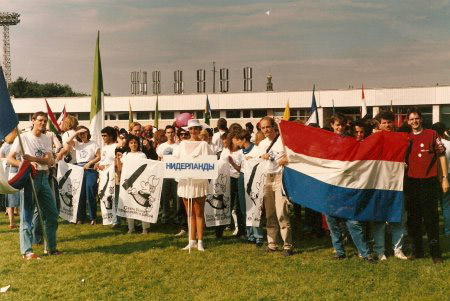 Photo: Chris Rümke · source
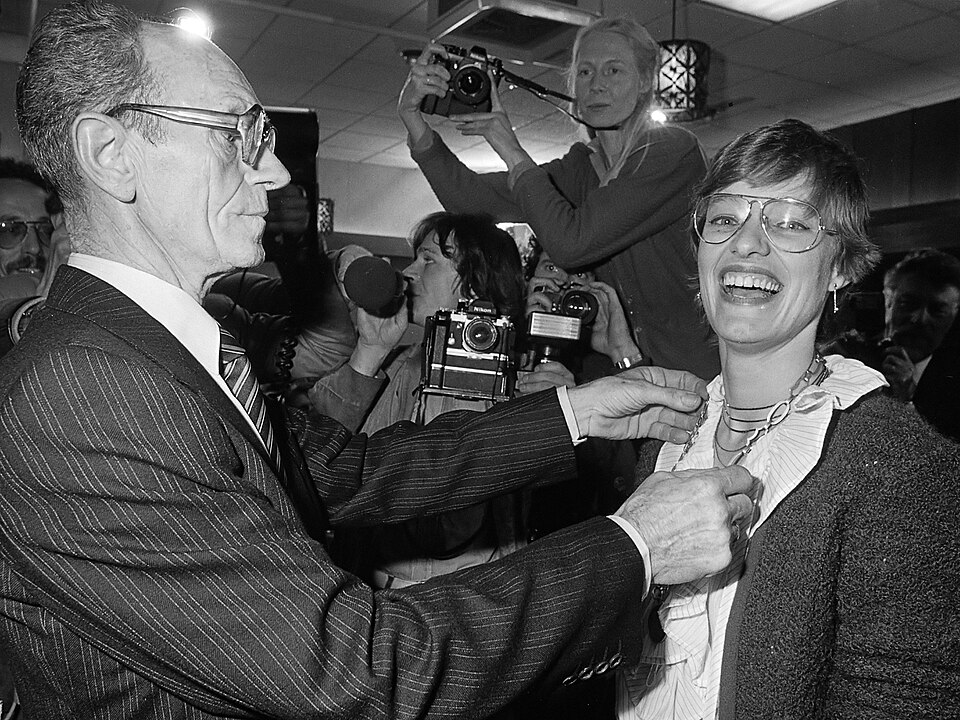 Photo: Hans van Dijk / Anefo, Nationaal Archief, CC0 · source
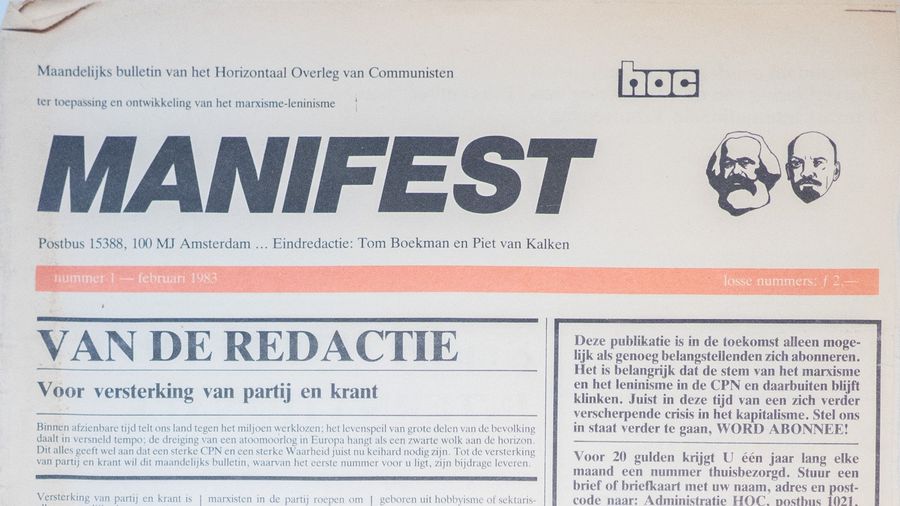 Photo: Manifest · source
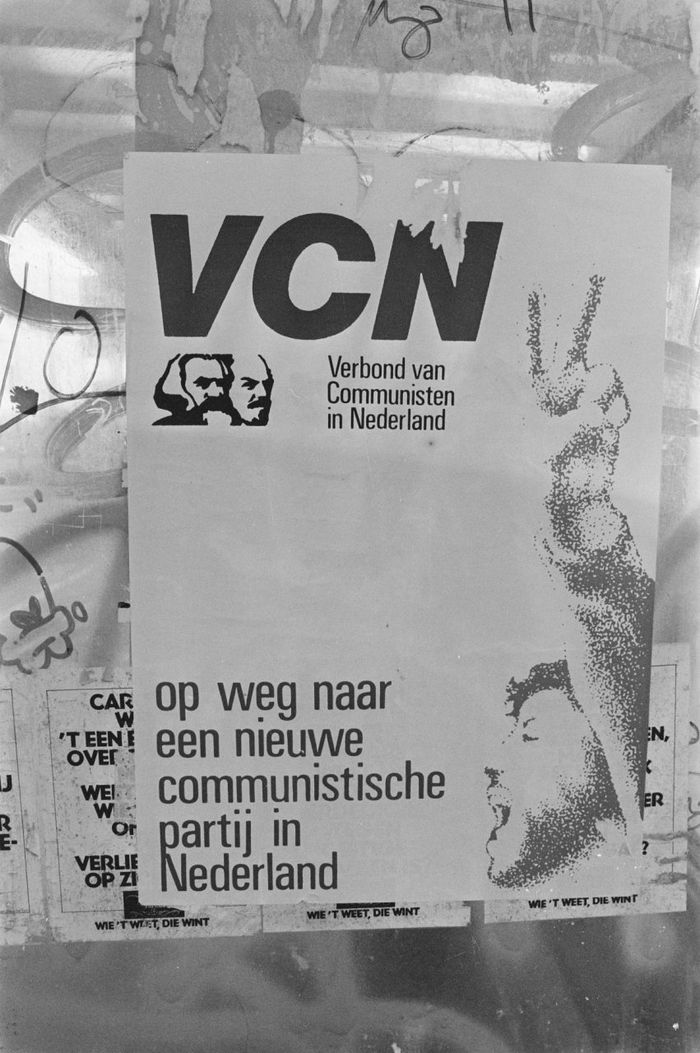 Photo: Rob C. Croes / Anefo, Nationaal Archief, CC BY-SA 3.0 · source
1983
The crisis in the international communist movement and the struggle to rebuild the communist party
Within the international communist movement, the current of Eurocommunism emerged in the decades after World War II. These were opportunist and reformist views and positions, which resulted in communist parties being stripped of their revolutionary character and transformed into social democratic parties. During the 1970s and 1980s, these opportunist positions gradually took over in the international communist movement, including the CPN. The result was a real crisis in the international communist movement, which was greatly inflamed by the fall of socialism in the Soviet Union and other countries of Eastern Europe. In the Netherlands, this led to the dissolution of the CPN in 1991.
That dissolution was not without internal strife. The party’s reformist course led to the abandonment of democratic centralism and the emergence of all kinds of “horizontal consultations”. In response to the reformist course, the Horizontal Corresponding Committee of Communists (HOC) was founded in 1982. The HOC opposed the organized attempt by the majority of the party leadership to transform the CPN into a social democratic party. From February 1983, the HOC published the newspaper Manifest to warn against the reformist course and to offer a communist view of the struggle and developments. When the CPN formally abandoned Marxism-Leninism in 1984, a new party emerged from the HOC and Manifest: the League of Communists in the Netherlands (VCN). After the CPN was dissolved, the New Communist Party of the Netherlands (NCPN) was founded in 1992 by the VCN and groups of CPN members who believed that the Netherlands needed a communist party. The use of the name CPN was not permitted at the time.
1992 → now
Rebuilding the communist party
Since then, the period of rebuilding the communist party has begun. This party building takes place under difficult circumstances, in which the labor movement is still weak, and in which the communist movement has not yet overcome its crisis, even internationally. But step by step, progress is being made, in the Netherlands and internationally. The establishment of the Communist Youth Movement of the Netherlands (CJB) in 2003 and its tremendous growth in recent years is an important development in this regard.
From its founding, the NCPN struggled tirelessly and without interruption for the ideals and principles of communism and for the building of the communist party. In September 2026, the NCPN decided to change its name to Communist Party of the Netherlands (CPN), the name that best fits our party politically and ideologically. The legal obstacles that stood in the way of this at the time of its founding had since lapsed, but the need for a communist party is still just as great.
Capitalism is, after all, characterized by great internal contradictions. People are getting poorer, while the development of science and the productive forces should actually help society move forward. The economic crises follow one another and are used as an opportunity to break down social and political rights more and more. The system is rotten and has nothing more to offer the people. In the 21st century, too, working people are constantly faced with the dilemma: socialism or barbarism? Sooner or later, conditions will be ripe for revolutionary upheavals. But socialism does not come naturally. It requires great effort to build a party that can lead the working class in the struggle for the overthrow of capitalism, and to build socialism-communism. It requires building the Communist Party of the Netherlands, the CPN.
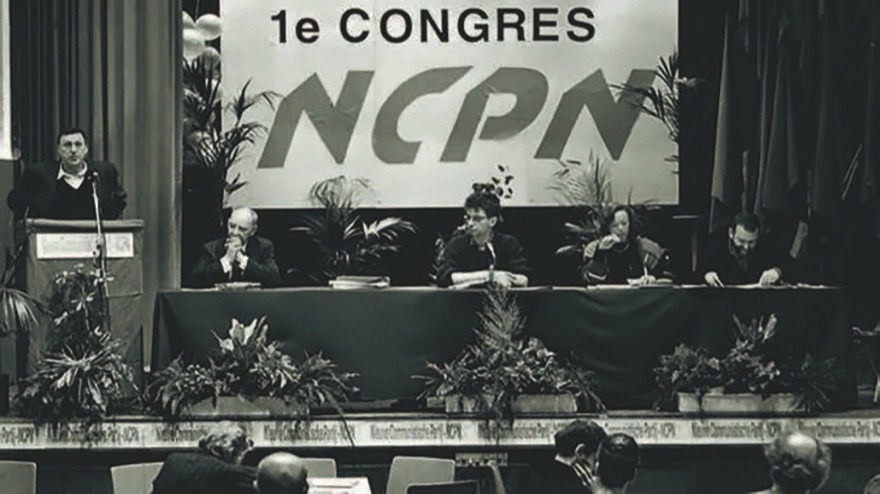 Photo: CPN archive · source
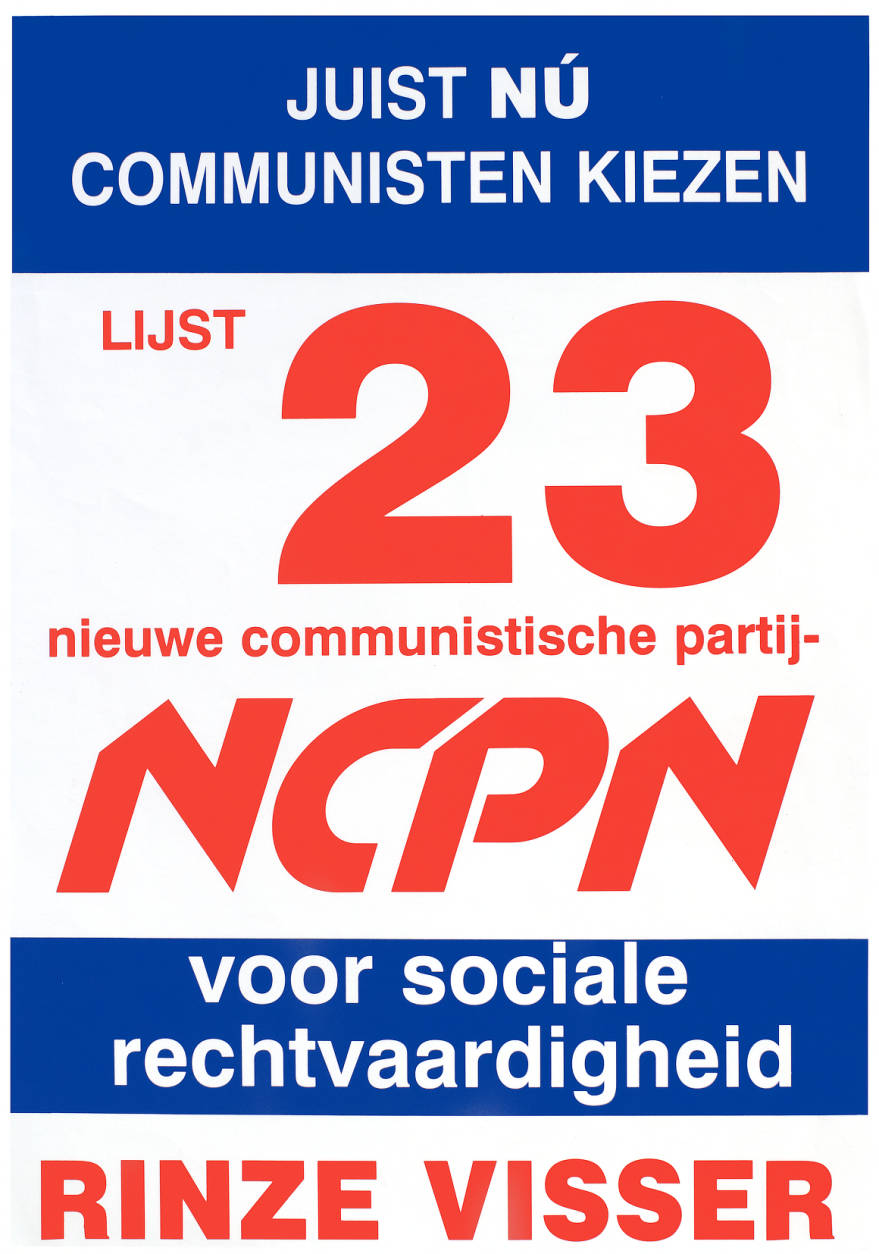 Poster: NCPN / DNPP collection, University of Groningen · source
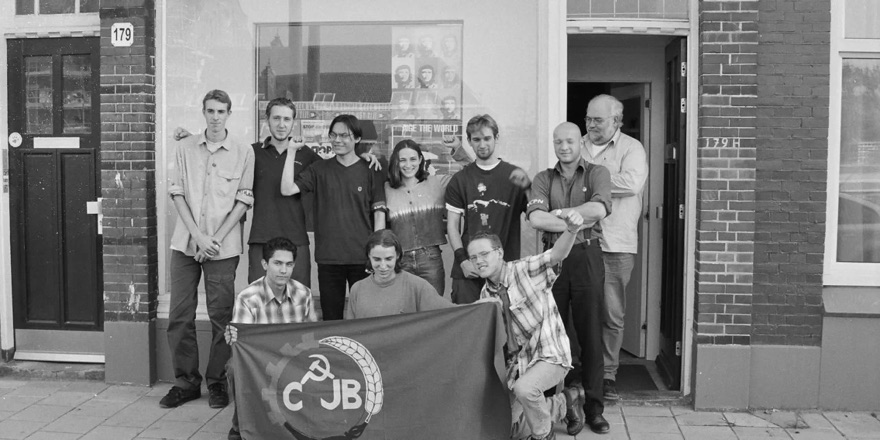 Photo: CJB · source
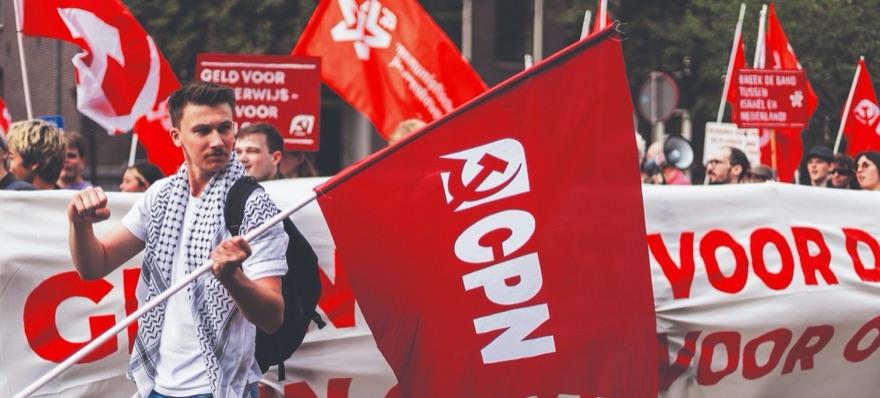 Photo: CPN · source
Want to know more about our vision and views?
Then read our in our political documents with background information, analysis and views on various issues.